

Introduction
When a business retires laptops, servers or storage media, the hardware may leave the building, but the data does not always leave with it. Every drive that is thrown away, resold or left in a cupboard is a potential breach waiting to be discovered during an audit. This guide explains how the secure destruction of data protects Singapore organisations, why data destruction has become a governance responsibility, and how services such as data wiping, hard disk degaussing and physical destruction fit into a documented, defensible disposal workflow.
Why Data Destruction Is a Governance Issue, Not Just an IT Task
Data destruction is often treated as a housekeeping job for the IT team, yet the consequences of getting it wrong sit squarely with the board. Under the PDPA, an organisation remains accountable for personal data until it is properly disposed of, which makes end-of-life handling a compliance and reputational matter, not merely a technical one.
Treating data destruction as governance means it is planned, approved and evidenced in the same way as any other control. When leadership can point to a clear policy and proof of secure destruction, disposal stops being an audit risk and becomes part of the organisation’s assurance story.
How Poor Hard Drive Disposal Creates Audit and Compliance Gaps
Weak hard drive disposal usually fails quietly. Drives are stockpiled, handed to informal recyclers, or simply reformatted and passed on, leaving recoverable records on devices no one is tracking. During an audit, these gaps surface as missing serial numbers, unexplained assets and no evidence that data was ever destroyed.
The problem is rarely a single lost drive; it is the absence of a trail. Without documented chain of custody and certificates, a business cannot demonstrate what was destroyed, when, or by whom, which is exactly the assurance an auditor is looking for.
What Secure Destruction of Data Means for Singapore Businesses
Secure destruction of data means rendering information permanently irretrievable, using a method matched to the sensitivity of the media and verified with documentation. It is the difference between deleting a file and guaranteeing that no forensic recovery is possible.
For Singapore businesses, secure destruction also means working with a licensed, standards-aligned provider so that disposal stands up to PDPA scrutiny and internal audit alike. The goal is not just an empty drive, but proof that the data can never resurface.
Why Businesses Need a Formal Media Destruction Policy
A media destruction policy turns good intentions into a repeatable process. It defines which assets must be destroyed, the approved methods for each media type, who signs off, and what records are kept.
Without a written policy, decisions are made case by case and mistakes become inevitable. A clear policy protects staff, gives auditors something concrete to review, and ensures every retired device is handled to the same standard.
How to Identify Data-Bearing Assets Before Disposal
Many organisations underestimate how much of their estate holds data. A simple inventory that flags every data-bearing asset before disposal prevents devices from slipping through unnoticed, and it is the foundation of any reliable media destruction services programme.
Common data-bearing assets to check for include:
- Laptops, desktops and servers
- Internal and external hard drives and SSDs
- Backup tapes and other removable media
- Photocopiers, multifunction printers and scanners
- Network appliances, firewalls and storage arrays
Data Wiping Services for Assets That Can Be Reused or Resold
Not every device needs to be destroyed. Where hardware still has value, professional data wiping services sanitise drives to recognised standards so that assets can be safely reused, redeployed or resold.
Certified wiping removes all data while preserving the device, supporting value recovery without compromising security. Each wipe should be logged and verified, so the business retains proof that the drive was sanitised before it left the organisation’s control.
Hard Disk Degaussing for Magnetic Storage Media
For magnetic media such as traditional hard drives and backup tapes, hard disk degaussing is a highly effective option. Degaussing applies a powerful magnetic field that disrupts the stored data at a physical level, rendering the drive permanently unreadable.
Because it neutralises the media itself rather than relying on software, degaussing is particularly suited to high-sensitivity magnetic storage that must be taken out of use with certainty.
How a Degaussing Service Fits Into a Secure Disposal Workflow
A degaussing service is rarely used in isolation. In practice it forms one stage of a wider workflow: assets are inventoried, sanitised or degaussed according to media type, and then recycled or destroyed responsibly.
Combining degaussing with documented collection and certificates gives businesses both security and a clean audit trail. It also allows magnetic and solid-state media to be handled by the most appropriate method within a single, coordinated project.
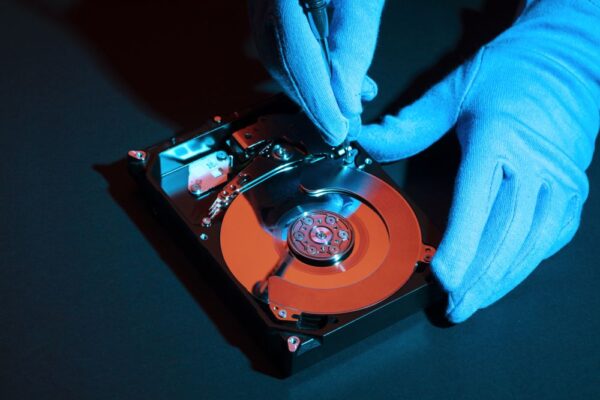
Hard Drive Destruction Service for High-Risk or End-of-Life Drives
Where drives hold highly sensitive data, are faulty, or have reached end of life, a hard drive destruction service provides the highest level of assurance. Physical destruction, such as shredding, reduces the media to fragments that cannot be reassembled or read.
This approach removes any doubt for the most sensitive records and is often the preferred method for regulated data. Destruction should always be paired with a certificate confirming which drives were destroyed.
Secure Hard Disk Disposal for Departing Employees, Office Moves and Device Refreshes
The moments when data is most exposed are transitions: an employee leaving, an office move, or a fleet-wide device refresh. In each case, drives change hands quickly and can easily be overlooked.
Secure hard disk disposal built into these events, with collection, sanitisation or destruction, and documentation, ensures that no drive is left behind or forgotten. Planning disposal alongside the transition, rather than after it, closes the window of risk.
How Media Destruction Services Help Close Security Gaps
Professional media destruction services close the gaps that ad hoc disposal leaves open. By covering hard drives, SSDs, tapes and other media under one accountable process, they remove the guesswork about how each device was handled.
A consistent service means every item is tracked from collection to destruction, with evidence at each step. That consistency is what turns disposal from a liability into a controlled, auditable activity.
Hard Drive Disposal Service Documentation: What Businesses Should Keep
Documentation is the proof that destruction actually happened. A reliable hard drive disposal service should give you records that stand up to audit, retained alongside your asset register and disposal approvals. When an auditor or regulator asks how a drive was handled, this paperwork is the answer.
The records worth keeping include:
- An itemised list of every asset collected
- The destruction method used for each item
- A certificate of destruction or disposal
- Serial numbers of destroyed drives where available
- The collection date and chain-of-custody record
Building an Internal Approval Process for Data Destruction
Clear ownership prevents drives from being destroyed too soon or, worse, not at all. An internal approval process defines who requests disposal, who verifies that data is backed up and no longer needed, and who signs off before destruction proceeds.
A short, documented sign-off protects the business on both sides: it avoids accidental loss of needed data while ensuring that retired assets are actually dealt with rather than left in limbo.
How to Reduce Human Error During Storage Media Disposal
Most disposal failures come down to human error: a drive left in a drawer, an asset tag not updated, or a device passed to the wrong pile. These slips are easy to make and hard to detect after the fact.
Reducing them relies on simple, consistent habits, secure collection points, clear labelling, and a single accountable vendor, rather than trusting staff to improvise. The less that depends on memory, the fewer gaps appear.
How to Align Data Destruction With IT Asset Disposal and Buyback
Data destruction works best as part of the wider IT asset disposal picture rather than a separate afterthought. When sanitisation, destruction, recycling and buyback are coordinated, businesses can protect data and recover value in one project.
Devices that pass through certified wiping can be resold or bought back, while high-risk drives are destroyed. Aligning the two ensures security is never traded away for the sake of value recovery.
Questions Business Leaders Should Ask Before Approving Disposal
Before signing off on disposal, leaders should ask a few grounding questions. If a vendor cannot answer them clearly, the risk stays with the business; a credible partner will welcome them and back the answers with licensing, standards and certificates.
- Which assets hold data, and how do we know?
- What destruction method is used for each, and why?
- Is the vendor licensed and certified to recognised standards?
- What documentation and certificates will we receive?
- Who is accountable at each stage of the process?
Why TD ITAD Supports Secure and Documented Data Destruction
TD ITAD is a Singapore-based IT asset disposition provider built around secure, documented destruction of end-of-life data. Services span certified data wiping, hard disk degaussing and physical hard drive destruction, with a documented chain of custody and certificates of destruction at every stage.
As an NEA-licensed GWC collector (Class A), aligned with SS 587 and certified to ISO 9001, ISO 14001 and ISO 45001, TD ITAD gives businesses, including government ministries and statutory boards, the assurance and paperwork that audits demand.
Conclusion
Secure destruction of data is no longer a background IT chore; it is a governance responsibility that protects an organisation from audit findings, breaches and reputational harm. With a clear policy, the right method for each media type, and documentation to prove it, disposal becomes a controlled and defensible process. Partnering with a licensed, standards-aligned provider such as TD ITAD lets Singapore businesses retire data-bearing assets with confidence, knowing the data is gone for good and the evidence is on file.
FAQ
What is the difference between data wiping, degaussing and physical destruction?
Data wiping sanitises a drive with software so the device can be reused or resold. Degaussing uses a magnetic field to permanently disrupt data on magnetic media so that the storage media becomes no longer usable and its data irretrievable. Lastly, physical destruction methods like crushing or shredding can give organisations a peace of mind. The right choice depends on the sensitivity of the data and whether the hardware still has value.
Does the PDPA require secure destruction of data?
The PDPA holds organisations accountable for personal data until it is properly disposed of, so secure destruction with documented proof is the safest way to meet that obligation and demonstrate compliance during an audit.
What documentation should we receive after data destruction?
You should receive an itemised record of the assets handled, the destruction method used, and a certificate of destruction or disposal referencing serial numbers where possible. These records should be kept with your asset register and disposal approvals.
Can data be destroyed while still recovering value from our hardware?
Yes. Devices in good condition can be sanitised through certified data wiping and then resold or bought back, while high-risk or end-of-life drives are physically destroyed, allowing you to protect data and recover value in the same project.
